Livy (45.18.3-7) tells us that the four regions of Macedonia were geographically defined by the three major rivers which ran roughly from the northern mountain passes south to the Aegean. The first of these regions, beginning in the east, extended between the Nestos and Strymon Rivers with Amphipolis as its major center. However, following the famous battle of 42 BC in which Mark Antony and Octavian (the future emperor Augustus) defeated Brutus and Cassius, the nearby town of Philippi was elevated to the status of a Roman “colony” in the “first district of Macedonia” (πρώτη[ς] μερίδος τῆς Μακεδονίας πόλις, κολωνία; Acts 16:12).
The Athenians had successfully founded Amphipolis about 437 BC at the mouth of the Strymon River. It served as a port from which to exploit the nearby gold and silver mines as well as the timber and abundant produce of the fertile Strymon valley. The city was incorporated into the Macedonian realm of Philip II in 357. Because of the extensive silting one can no long get a sense of the ancient harbor for the city. It was here that Alexander assembled his fleet before invading Asia. As the city was also located on the main east-west land route—the Macedonian “royal road” that later became the VE, it continued to grow and flourish well into the Roman period.
Like other Macedonian cities, its main officials during the Roman period continued to be called politarchs.1 The city began to decline only after the rapid rise of the nearby colony of Philippi in the period immediately before Paul’s first visit. Yet after the Battle of Philippi, it too had been granted the status of a “free city” (civitas libera) by the victors and soon was minting provincial coinage.2
Acts 17:1 states that, after leaving Philippi, Paul’s party merely “passed through” (διοδεύσαντες) the cities of Amphipolis and Apollonia on his way to Thessalonica. That may have been due to the lack of a Jewish community, a necessary element in Paul’s evangelistic method to this point. There is no evidence for an early Jewish community in the city, nor for a Christian community before the fourth century when Narcissus of Amphipolis is listed among the attendees of the Council of Philippopolis held in 343.3 None of the five excavated Christian basilicas date earlier than the mid-fifth century.4
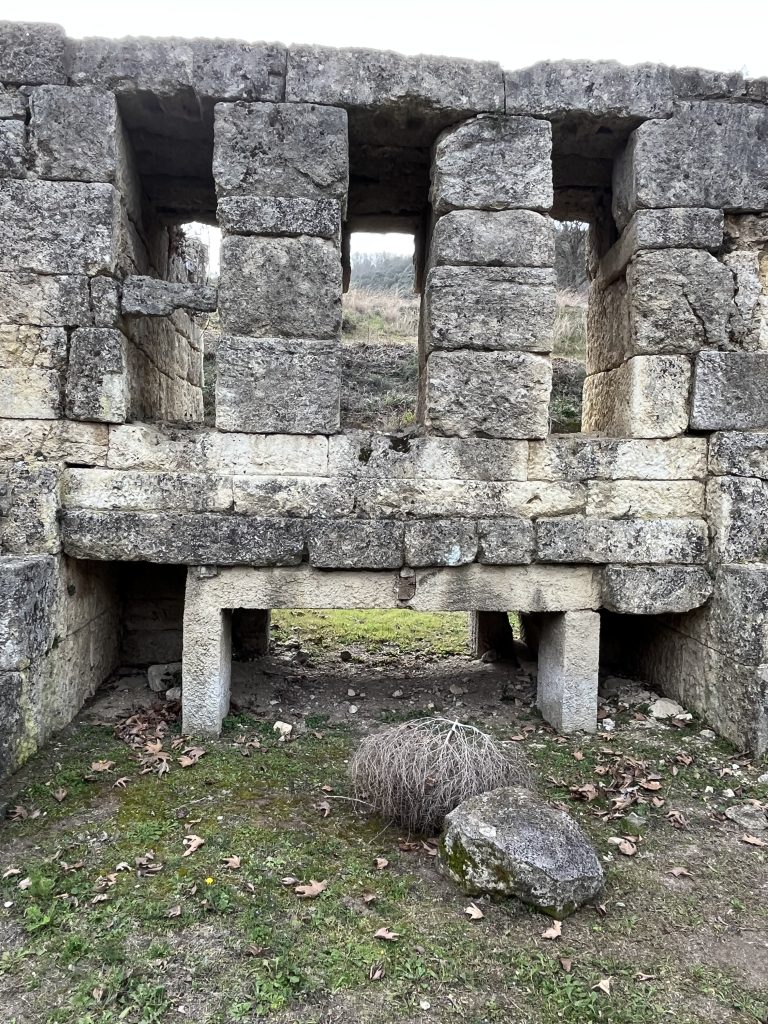
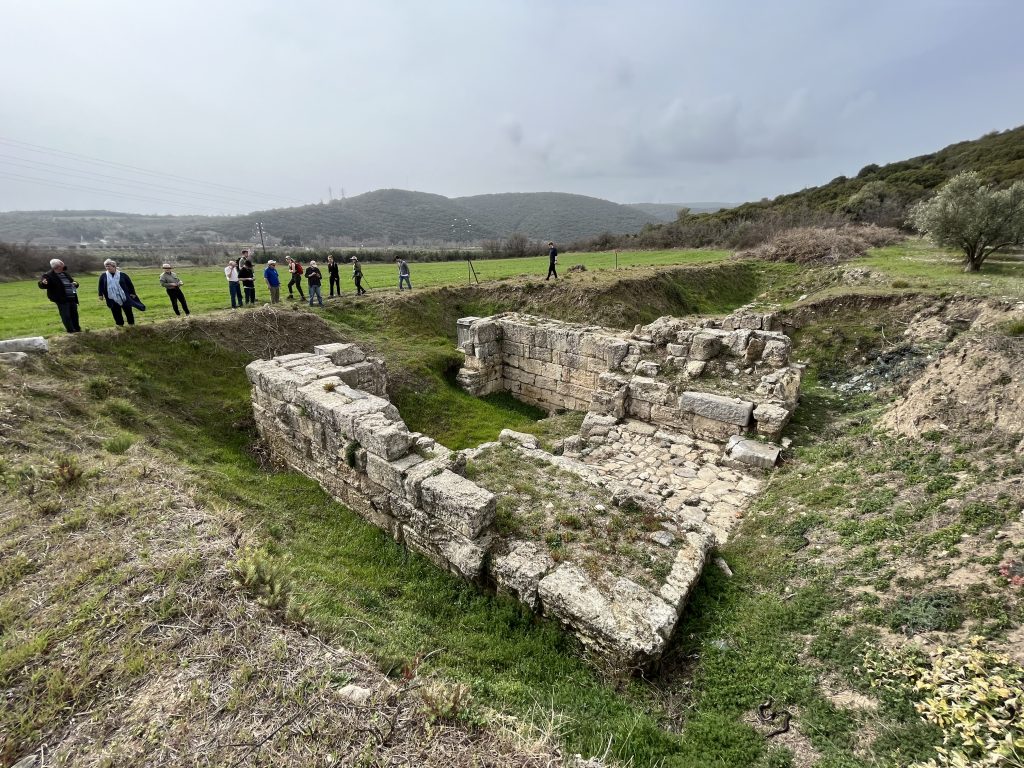
Excavations in the southern city walls exposed a gate (Gate Δ΄) with two statue bases bearing honorific inscriptions. The first was dedicated to the deified Augustus calling him savior and founder of the city, while the other was dedicated to the proconsul Lucius Calpurnius Piso, called the patron and benefactor of the city. According to Lazaridis, these inscriptions demonstrate that at the time of Augustus or slightly earlier, this gate linked directly with the Via Egnatia and was the main entrance to the city. He writes, “It is not impossible that the Via Egnatia actually passed through the Gate and entered the city, as it did at neighboring Philippi.”5 We suggest, however, that this route was a spur that went through the city while the main VE went around the wall to the east.
Created by GMT & JTS
Last updated 11/12/2025 JTS
- Koukouli-Chrysanthaki, Ch. “Amphipolis.” Essay. In Brill’s Companion to Ancient Macedon, 409–36. Berlin: Brill, 2011, p. 428. ↩︎
- Koukouli-Chrysanthaki, “Amphipolis,” 429. ↩︎
- David Wilmshurst, personal communication with author; Mansi, Joannes Dominicus, Phil. Labbeus, Gabr. Cossartius, and Nicolaus Coleti. Sacrorum conciliorum nova et Amplissima Collectio: Ab anno CCCXLVII ad annum CCCCIX. Vol. 3. Florentia: Antonius Zatta Veneti, 1759, pp. 138–140. ↩︎
- TIB 11.1, 204–5. ↩︎
- Lazaridis, Dimitrios. Amphipolis. Athens: Ministry of Culture, 2003, p. 39; see pp. 22–23 fig. 5 for its location in the city plan. ↩︎